
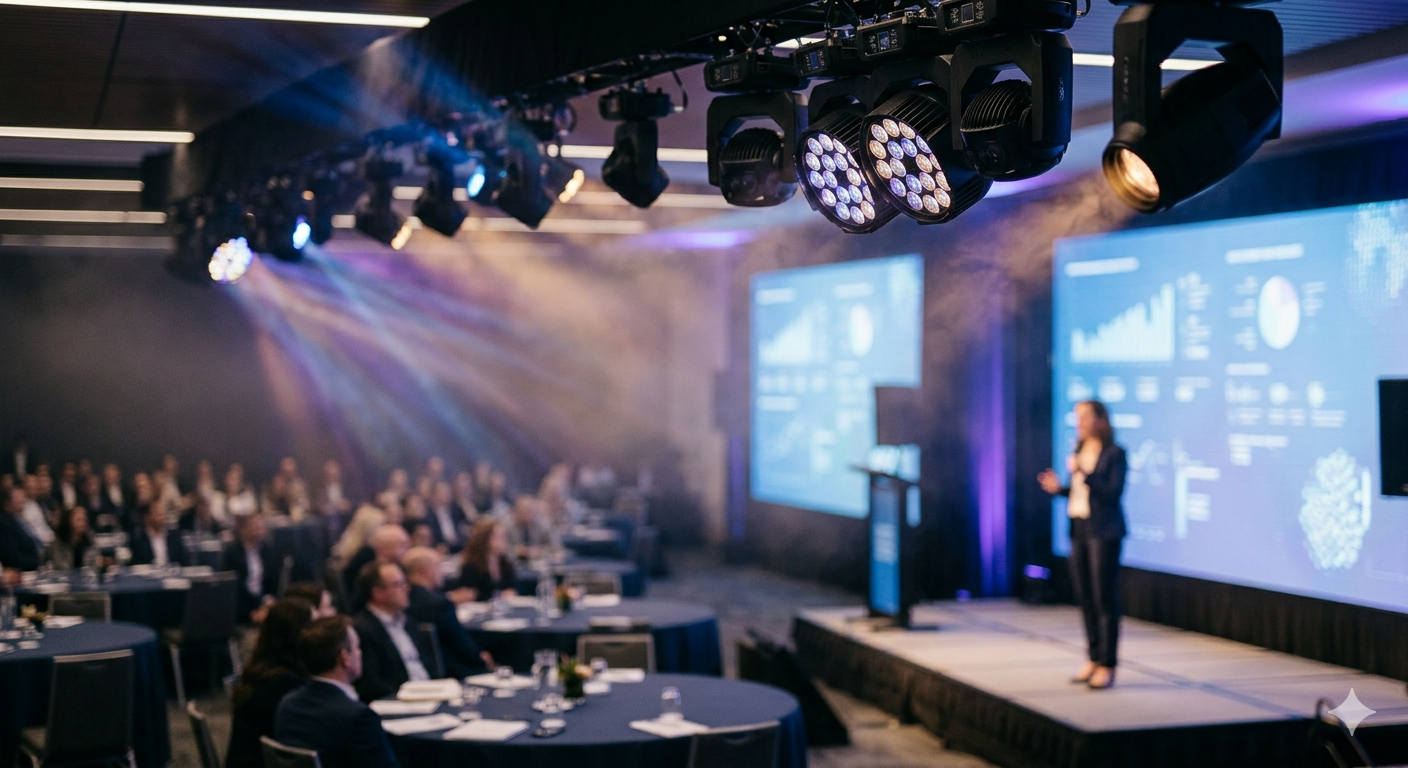
Professional stage lighting improves live events by making performers visible, shaping the mood of the venue, guiding audience attention, and making photos and videos look better. For concerts, private parties, corporate events, church productions, and creative showcases, lighting is not just decoration. It is part of the experience.
For event organizers in Southern California, working with a provider such as All American Audio Visual helps connect lighting design with the rest of the production, including sound, staging, timing, and room layout. The goal is simple: make the event look polished while keeping the audience focused on the right moments.
What does stage lighting do?
Stage lighting controls visibility, mood, movement, and attention during a live event. It helps the audience see speakers, performers, DJs, bands, dancers, and presenters clearly. It also creates atmosphere by using color, brightness, direction, and timing.
A basic lighting setup may include front lights, wash lights, uplights, moving heads, and control systems. A more advanced setup may include programmed scenes, color changes, dimming cues, and synchronized lighting transitions.
In 2026, event lighting is also important for content creation. Guests often record clips for social media, and poor lighting can make even a well-planned event look flat or unprofessional.
Why is lighting important for live events?
Lighting is important because it changes how people feel inside the venue. Bright, even lighting can make a business presentation feel clear and professional. Colorful moving lights can make a concert or party feel energetic. Soft uplighting can make a wedding, gala, or private event feel warm and premium.
AVIXA’s market research shows the global pro AV industry is a major and growing category, with revenue forecast to reach $402 billion by 2030. That growth includes demand for AV systems used in venues, events, corporate spaces, and live experiences.
That matters because modern events compete with screens, social media, and high audience expectations. People expect events to look good in person and on camera.
What types of stage lights are commonly used?
Common stage lights include wash lights, moving heads, uplights, spotlights, PAR lights, LED bars, and effect lighting. Each light has a different purpose, and the best setup depends on the event type and venue size.
| Lighting Type | Best Use |
|---|---|
| PAR lights | General stage wash and color |
| Moving heads | Motion, energy, and dynamic effects |
| Uplights | Walls, décor, and room atmosphere |
| Spotlights | Speakers, performers, and key moments |
| LED bars | Background lighting and visual texture |
| Blacklights | UV parties and glow effects |
For organizers comparing equipment, professional stage lighting rental los angeles services can help match fixtures to the venue instead of renting lights blindly.
When should you rent professional stage lighting?
You should rent professional stage lighting when the event includes a stage, performance, speech, DJ, band, dance floor, product reveal, award ceremony, or any moment that needs visual focus. Professional lighting is also useful when photos and videos are important.
Renting makes sense when:
- The event is larger than a small private gathering.
- The venue has poor built-in lighting.
- Speakers or performers need to be clearly visible.
- You want brand colors or mood lighting.
- There will be photography or video.
- You need safe setup and teardown.
OSHA guidance for temporary event-related electrical installations highlights that temporary lighting and wiring must be installed securely and protected from physical damage where needed.
That is one reason lighting should not be treated casually. Good lighting is creative, but it also needs safe placement, cabling, and power planning.
How do lighting and sound work together?
Lighting and sound work together by controlling the audience’s energy and attention. Sound delivers the message or music, while lighting tells people where to look and how to feel. A great event usually needs both systems planned together.
For example:
- A keynote needs clear front lighting and strong speech audio.
- A DJ party needs dance-floor sound and moving lighting.
- A live band needs stage wash, backlighting, and balanced speakers.
- A product launch needs reveal lighting and microphone clarity.
This is why professional event production teams think beyond “lights only.” They plan how lighting interacts with people, cables, speakers, staging, cameras, and venue rules.
For business event planning standards and professional event education, resources from Meeting Professionals International can also help planners understand how meetings, conferences, and live events are structured professionally.
Practical lighting framework
Use this simple framework before renting lights:
1. Purpose
Decide what the lighting must do. Is it for visibility, atmosphere, dance energy, brand color, photography, or stage focus?
2. Placement
Map where the lights will go. Poor placement can cause shadows, glare, or blocked sightlines.
3. Power
Confirm safe power access. Do not overload outlets or run loose cables through walking paths.
4. Control
Decide if lights need manual control, pre-programmed scenes, or sound-active effects.
5. Support
Choose whether you need delivery only, setup help, or an on-site lighting technician.
Stage lighting checklist
Before your event, confirm:
- Venue size and ceiling height
- Stage or performance area
- Number of performers or speakers
- Brand colors or mood colors
- Power outlets and cable paths
- Photography/video requirements
- Setup and teardown times
- Whether a technician is needed
- Backup lighting plan
- Venue restrictions
FAQs
What is stage lighting rental?
Stage lighting rental is the temporary rental of lighting equipment for performances, parties, conferences, concerts, and other events.
What lights are best for a small stage?
PAR lights, LED wash lights, and simple uplights are often enough for a small stage.
Do I need a lighting technician?
You need a technician if the event has live cues, multiple scenes, moving lights, or a complex schedule.
Can stage lights be used outdoors?
Yes, but outdoor lighting requires weather-safe planning, proper power access, and suitable equipment.
Is LED lighting better for events?
LED lighting is popular because it is efficient, flexible, bright, and available in many colors.
How many lights does an event need?
It depends on room size, stage width, ceiling height, audience layout, and desired mood.
Conclusion
Professional stage lighting makes live events more visible, memorable, and polished. It supports the performance, improves the atmosphere, and helps guests experience the event the way it was intended. Before choosing lights, match the setup to the venue, purpose, audience, and safety needs.